The Necromancy of Scale Link to heading
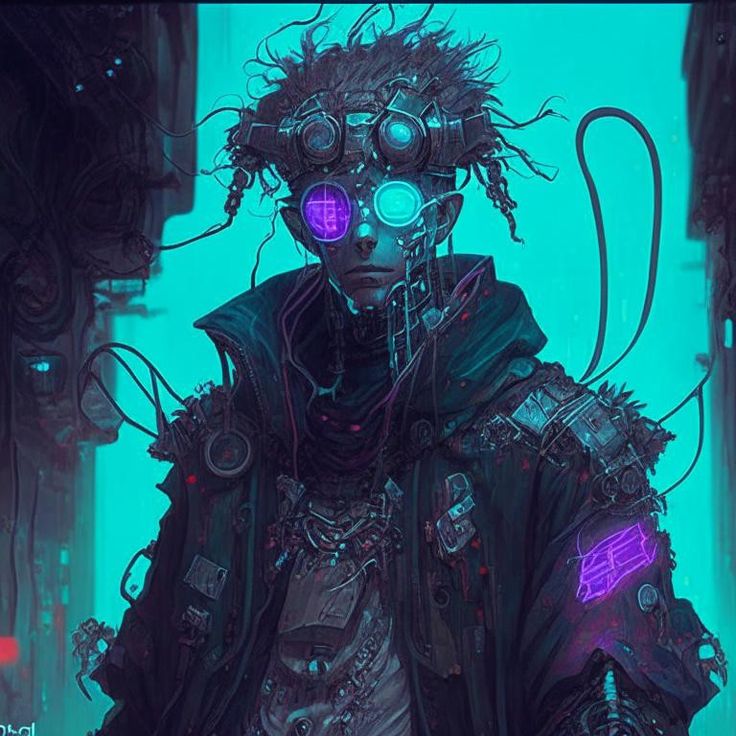
When Technology Becomes Magic Link to heading
Every age has a technology that begins to feel less like an invention and more like a form of magic. For the modern world, artificial intelligence, especially large language models, has taken on that symbolic role. It can now perform tasks once treated as signs of specifically human intelligence: writing, summarizing, translating, coding, arguing, image-making, and simulating expertise.
For its advocates, this feels like a breakthrough in human capability. For its critics, it feels like a violation: an extraction of human culture, labor, creativity, and memory.
At first, it is tempting to map this divide onto a simple magical binary. AI supporters seem like alchemists: experimental, transformational, future-oriented. AI critics seem like anti-magical traditionalists, fearful of progress and suspicious of new powers.
But that reading is too easy.
SenLinYu’s Alchemised offers a more useful and more unsettling metaphor. The novel imagines a world after catastrophic war, where alchemy and necromancy are not merely aesthetic forms of magic but organized systems of power. Alchemy is associated with transformation, healing, study, and the manipulation of matter. Necromancy is associated with domination, reanimation, bodily violation, and the conversion of the dead into infrastructure.
That distinction gives us a sharper language for AI.
The most aggressive pro-AI position is not always alchemical. Often, it is necromantic. It treats data, labor, art, energy, water, attention, and trust as resources to be consumed in the pursuit of scale. It does not merely transform the world. It feeds on it.
Meanwhile, many AI skeptics are not enemies of progress. They are not opposed to machine learning in medicine, scientific research, accessibility, climate modeling, or better treatments for disease. Their objection is not to intelligence, computation, or invention. Their objection is to a political economy that asks human beings to surrender agency, creativity, authorship, and dignity in exchange for convenience.
The central question, then, is not whether AI is simply good or bad. The more precise question is this:
AI becomes alchemy when it transforms the world without stripping people of agency. It becomes necromancy when it consumes the world as raw material and returns it as a system of control.
A Brief Map of the Metaphor Link to heading
For readers unfamiliar with fantasy as a genre, a “magic system” is not just decoration. It is the set of rules that determines how power works in an imagined world: who can use it, what it costs, what institutions control it, and what moral dangers follow from it.
That is why Alchemised is useful for thinking about artificial intelligence. The novel’s world is not simply a world where magic exists. It is a world where power has been organized into systems: alchemy, necromancy, guild authority, wartime hierarchy, bodily vulnerability, and contested memory.
In this essay, I am not using alchemy and necromancy as simple labels for “good magic” and “bad magic.” The distinction is more political than that.
Alchemy, as I am using it here, means disciplined transformation. It is the difficult work of changing one thing into another under conditions of study, constraint, and purpose. In the AI debate, alchemy names the uses of technology that expand human agency: tools that help people learn, heal, create, understand, communicate, and act with more power than they had before.
Necromancy, by contrast, means extraction without reciprocal obligation. It is power that feeds on what it does not honor. It reanimates bodies, memories, labor, and remains, turning them into instruments for someone else’s command. In the AI debate, necromancy names the uses of technology that absorb human culture, labor, attention, trust, and natural resources, then return them as products controlled by powerful institutions.
The metaphor works because AI is not one thing. Like magic in a fantasy world, it depends on rules, ownership, access, cost, and governance. The same technical capability can become liberating or exploitative depending on who controls it, who benefits from it, and who is forced to pay the price.
The False Spell: Pro-AI as Alchemy Link to heading
The dominant pro-AI story presents artificial intelligence as a kind of alchemy. It promises transformation. It promises acceleration. It promises that individuals, teams, companies, and whole societies can become more capable than they were before.
In this vision, AI is a reagent. It converts scattered information into usable knowledge. It converts slow workflows into automated processes. It converts language into software, prompts into images, questions into answers, and uncertainty into apparent expertise.
The pro-AI imagination loves this language of conversion. It speaks of copilots, assistants, tutors, agents, amplifiers, partners, and collaborators. These words are not neutral. They present AI as a benevolent instrument that helps human beings exceed their limits.
There is truth in this account.
AI can help a student understand difficult material. It can help a small team do work that once required a larger staff. It can help disabled users navigate systems designed without them in mind. It can help non-specialists understand technical documents. It can help researchers search, summarize, model, and prototype. It can help doctors, scientists, engineers, teachers, translators, programmers, and public servants perform useful work more efficiently.
That is the best version of the alchemical dream: transformation in service of human capability.
But the problem with the pro-AI story is that it often stops at capability. It asks what the tool can do, but not what the tool consumes. It celebrates the spell, but ignores the cost of casting it.
This is where alchemy begins to darken.
If transformation requires indiscriminate extraction, if every book, image, song, article, dataset, conversation, classroom, workplace, and social relation becomes potential training material, then the metaphor changes. The system is no longer merely alchemical. It has become necromantic.
It is not creating from nothing. It is reanimating what it has taken.
Necromancy as the Politics of Scale Link to heading
In fantasy, necromancy is not only about death. It is about control: the refusal to let bodies, memories, or remains exist outside the will of the powerful.
In Alchemised, necromancy is terrifying not simply because it involves death, but because it reorganizes death into infrastructure. The dead are not allowed to remain dead. They are used, commanded, weaponized, and made productive.
That is why necromancy is such a strong metaphor for the current AI economy.
Large-scale AI systems are built on accumulation. They require enormous archives of human expression: books, essays, journalism, code, art, documentation, forum posts, academic work, public records, conversations, and countless other traces of human life. They also require massive computational infrastructure, energy, capital, and institutional power.
The issue is not that learning from the past is inherently wrong. Every culture learns from what came before. Every artist, scientist, writer, and engineer is shaped by inheritance.
The issue is the scale, opacity, and ownership of the extraction.
A human being who learns from culture remains accountable as a human being. They have a biography, a position, a context, a body, and a set of relationships. A model trained on culture has none of these things. It can imitate style without lived experience. It can generate fluency without responsibility. It can produce persuasive language without human memory. It can simulate expertise without belonging to the community whose knowledge it recombines.
This is why AI-generated work often feels uncanny. It carries the surface of life, but not life itself.
The necromantic quality is not only aesthetic. It is political.
When human expression is absorbed into systems owned by powerful companies, culture is converted into infrastructure. What was once distributed across writers, artists, coders, teachers, translators, journalists, researchers, and communities becomes concentrated inside platforms. The system then sells automated access back to the people whose labor, language, and creativity made it possible.
This is not the alchemy of transformation. It is the necromancy of enclosure.
It takes the living archive of human culture and turns it into a machine that can compete with the living.
The Alchemy of Refusal Link to heading
This is where the anti-AI position is often misunderstood.
Many critics of AI are not against progress. They are not arguing that computation should stop, that scientific research should halt, or that medicine should refuse powerful tools. They are not opposed to using machine learning to discover better treatments for disease, improve diagnostics, support accessibility, model complex systems, reduce administrative burdens, or expand human knowledge.
In fact, many AI skeptics want technology to do exactly what alchemy promises at its best: heal, repair, clarify, and transform.
Their objection is not to the existence of the laboratory. Their objection is to the necromancer who raids the graveyard and calls it innovation.
This is where some people seem to be losing the plot.
There is a profound difference between AI as a field of inquiry and AI as a political economy. There is a difference between using computational methods to support medical research and using generative systems to flood the internet with synthetic content. There is a difference between assistive tools that increase agency and workplace systems designed to deskill workers. There is a difference between models built with consent, transparency, and accountability and models trained through mass appropriation followed by legal and moral evasion.
The anti-AI position, at its strongest, is not anti-intelligence. It is anti-extraction.
It says that progress should not require the surrender of human creativity. It says that better tools should not mean weaker rights. It says that scientific discovery should not be used as moral cover for corporate enclosure. It says that automation should not become an excuse to erase authorship, degrade labor, or simulate human presence where accountability is required.
This is not reactionary nostalgia. It is a demand for governed transformation.
That demand is alchemical.
Alchemy is not merely change. It is disciplined change. It is transformation under constraint. It is the belief that power must be studied, refined, bound, and directed toward repair rather than domination.
In this sense, the most serious AI critics resemble alchemists more than enemies of magic. They are not saying, “Do not transform the world.” They are saying, “Do not confuse transformation with consumption.”
The Resource Hunger of AI Maximalism Link to heading
The flipped metaphor becomes clearest when we look at the resource logic of AI maximalism.
The strongest pro-AI voices often speak as if every limit is an obstacle to overcome. More data. More compute. More deployment. More automation. More synthetic content. More integration into education, law, medicine, entertainment, government, and work. The assumption is that scale itself will solve the problems created by scale.
This is the necromantic temptation: the belief that enough extraction will eventually become wisdom.
But intelligence does not emerge morally purified simply because the system becomes larger. A model trained on more culture does not automatically become more just. A platform used by more people does not automatically become more democratic. A tool that generates more output does not automatically create more meaning.
The pro-AI maximalist position often treats the world as an undifferentiated resource field.
Text becomes training data. Art becomes style. Workers become productivity units. Students become adoption metrics. Users become feedback loops. Conversation becomes behavioral signal. Trust becomes interface design. Attention becomes monetization. Even creativity becomes something to be optimized, accelerated, and recombined.
This is why the critique of AI cannot be limited to copyright or job displacement, even though both matter. The deeper concern is political: what kind of world is being built when every human trace becomes potential input for a machine someone else owns?
Necromancy is not only the use of the dead. It is the refusal to let anything remain outside the machinery of use.
Memory, Identity, and the Dataset Problem Link to heading
In Alchemised, memory is not passive background, but contested territory: a record of identity, trauma, loyalty, and political danger.
One of the most politically useful themes in the novel is that memory is more than personal recollection. It is the protagonist’s identity, agency, vulnerability, and power. What a person remembers, what they are made to forget, and what others can extract from them become central questions.
This maps directly onto the dataset problem in AI.
Large language models are built from memory-like structures, but not memory in the human sense. They do not remember as people remember. They absorb patterns from enormous bodies of text and generate new outputs from statistical relationships. The result is a system that can sound culturally literate while being detached from authorship, consent, and context.
That detachment is the source of much of the conflict.
Human culture is not just content. It is situated experience. A poem is not merely a sequence of words. A medical note is not merely data. A forum post is not merely language. A classroom resource is not merely instructional material. A painting is not merely visual information. These things come from lives, communities, histories, bodies, institutions, and struggles.
When those traces are absorbed into a model, the human context can disappear while the productive value remains.
That is the necromantic operation: extraction without relationship.
AI companies often frame this as learning. Critics frame it as appropriation. The disagreement persists because both descriptions contain part of the truth. Models do learn patterns. But they do so through systems that can separate value from consent, expression from authorship, and cultural memory from the people who created it.
The question is not whether culture can influence future creation. Of course it can. The question is whether influence can be industrialized at planetary scale and then enclosed as private infrastructure.
In Alchemised, memory is contested terrain. In the AI debate, datasets are contested terrain. Both involve the same deeper conflict: who gets to extract meaning from the past, and who controls what that extraction becomes?
Guilds, Platforms, and the New Magical Class Link to heading
In fantasy, a guild is more than a professional association. It is an institution that regulates knowledge: who may learn it, who may practice it, who may profit from it, and who may be punished for using it outside approved channels.
The tribal politics of AI is, as it is in necromancy, about who controls the tool.
In Alchemised, power is institutional. Guilds, ruling families, military structures, laboratories, and political factions shape how magic is used. Power does not float freely. It is organized.
The same is true of AI.
The public debate often pretends that people are arguing about “AI” in the abstract. But most arguments are really about a specific configuration of AI: large models trained on enormous datasets, owned by powerful companies, deployed through cloud infrastructure, integrated into workplaces, and governed by terms most users cannot negotiate.
That is why the metaphor of guild power matters.
Big AI companies function like magical guilds. They control the laboratories, the compute, the model weights, the deployment channels, the safety policies, the licensing terms, and the mythology of progress. They decide which forms of magic become available, which remain proprietary, which are forbidden, and which are marketed as inevitable.
The pro-AI tribe often sees these institutions as builders of the future. The anti-AI tribe often sees them as necromantic houses: extracting from the commons, enclosing knowledge, and selling automated access back to the people whose work made the system possible.
This disagreement is not merely technical. It is feudal.
Who owns the spellbook?
Who controls the laboratory?
Who gets to name extraction as innovation?
Who pays the cost when the experiment fails?
Who is asked to adapt, and who is allowed to profit?
The problem is not that powerful tools exist. The problem is that power over those tools is concentrated, opaque, and insulated from the people most affected by them.
Against the Crude Binary Link to heading
The simplest version of the AI debate says:
- pro-AI people want progress;
- anti-AI people fear the future.
That framing is politically convenient and intellectually weak.
A better framing is this:
- necromancy is extraction without consent;
- alchemy is transformation with agency.
By that standard, a pro-AI position can be necromantic when it treats human beings, culture, labor, and natural resources as fuel for endless scale. It becomes necromantic when it dismisses consent as impractical, treats authorship as obsolete, frames labor displacement as destiny, and assumes that every social problem can be solved by more automation.
But an anti-AI position can be alchemical when it insists that technology must be accountable to human flourishing. It becomes alchemical when it asks for better medical tools, better accessibility, better public-interest research, better labor protections, better consent regimes, better democratic oversight, and better definitions of progress.
This does not mean all AI skepticism is wise. Some of it is reactionary. Some of it does romanticize the past. Some of it collapses different technologies into one undifferentiated threat.
But it also does not mean all AI enthusiasm is enlightened. Some of it is reckless. Some of it is economically self-interested. Some of it mistakes novelty for wisdom and scale for moral legitimacy.
The real divide is not between people who love technology and people who hate it.
The real divide is between two philosophies of power.
One asks: how much can we extract?
The other asks: what kind of transformation preserves human agency?
Creativity, Agency, and the Fear of Being Replaced Link to heading
The fear surrounding AI is often described as fear of replacement. That is partly true, but incomplete.
People are not only afraid that machines will do certain tasks faster. They are afraid that institutions will use machines to redefine the value of human beings. They are afraid that creativity will be treated as a style to be replicated rather than a lived act of meaning. They are afraid that their work will be absorbed into systems that make them economically disposable.
This is why the AI debate becomes so emotional.
For many artists, writers, translators, teachers, programmers, designers, and knowledge workers, the issue is not simply that AI can generate output. The issue is that AI-generated output can be used by institutions to weaken the bargaining power of the people whose work trained the system.
The machine does not need to be better than the human at everything. It only needs to be cheap enough, fast enough, and plausible enough for institutions to lower their standards.
That is the political fear.
Not that creativity will vanish, but that creative labor will be devalued.
Not that knowledge will disappear, but that expertise will be simulated.
Not that communication will stop, but that trust will be automated.
Not that humans will become useless, but that systems of power will behave as if they are.
Here again, the anti-AI position is not necessarily anti-progress. It is a defense of agency. It asks whether human beings will remain authors of their tools or become raw material for them.
Toward Civic Alchemy Link to heading
The alternative to necromantic AI is not technological retreat. It is civic alchemy.
Civic alchemy would mean developing and deploying AI under conditions that preserve agency, consent, accountability, and public value. It would distinguish between uses that genuinely expand human capability and uses that merely automate extraction.
AI used to support medical research can be alchemical.
AI used to improve accessibility can be alchemical.
AI used to reduce bureaucratic friction in public services can be alchemical.
AI used to help people understand complex information can be alchemical.
AI used by workers under conditions they control can be alchemical.
AI used to assist creativity without erasing authorship can be alchemical.
But AI used to replace workers without protection is necromantic.
AI trained on creative labor without consent or compensation is necromantic.
AI used to flood public discourse with synthetic persuasion is necromantic.
AI used to simulate expertise while evading accountability is necromantic.
AI used to concentrate power in a handful of platforms is necromantic.
AI used to make human beings more dependent, less creative, and less able to refuse is necromantic.
The distinction is institutional.
The same underlying techniques can serve radically different social orders depending on how they are governed, who benefits, who consents, who is harmed, and who has the power to say no.
The Question Is Not Magic, But Governance Link to heading
The conflict between alchemy and necromancy helps clarify the cultural conflict around AI because both are conflicts about dangerous knowledge.
The issue is not whether transformation is possible. It clearly is.
The issue is whether transformation will be governed by care or by appetite.
The first version of the AI metaphor makes pro-AI advocates the alchemists and anti-AI critics the enemies of magic. But that framing gives too much credit to the language of innovation and too little credit to the ethics of refusal.
A better version recognizes that the most aggressive AI maximalism often resembles necromancy: it consumes culture, labor, memory, energy, and attention, then reanimates them as scalable output controlled by powerful institutions.
Meanwhile, the strongest AI skepticism is not anti-progress. It is a demand for a better kind of progress. It wants tools that help cure disease without turning patients into data mines. It wants creative technologies that do not erase creators. It wants automation that expands human agency rather than narrowing it. It wants intelligence in service of life, not life reorganized in service of machines.
We do not need to choose between worshiping the machine and burning the laboratory.
We need to decide what kind of magic we are willing to institutionalize.
The question is not whether AI will transform society.
It already is.
The question is whether that transformation will be necromancy disguised as progress, or alchemy disciplined by human dignity.